Running a LARP is part art, part logistics, and part real-world business structure. If you’re considering forming a nonprofit, it’s important to know what each type requires, what laws govern them, and what structure you’ll need behind the scenes.
Below is a breakdown of the main nonprofit types that align with LARP organizations plus the “guild rules” (creation steps, board needs, maintenance, and restrictions) for each.
Best for: Story-driven, roleplay-focused, youth, or arts/education-based LARPs.
501(c)(3) — Charitable, Educational, or Artistic Nonprofit
Guild Requirements for Creation
To form a 501(c)(3), you must:
Create Articles of Incorporation with charitable/educational/artistic language
Apply for state nonprofit status
File IRS Form 1023 or 1023-EZ (the big step — the “boss fight”)
Establish bylaws defining how your LARP nonprofit is run
Appoint a founding Board of Directors
Open a dedicated bank account
Document your mission statement (education, art, youth development, etc.)
Minimum Board Requirements
Most states require:
At least 3 directors
Directors cannot all be related
Officers (President, Treasurer, Secretary) must be designated
Board must operate with fiduciary responsibility, meaning decisions must benefit the organization, not individuals
Rules & Restrictions
Must operate for the public good, not just entertainment
No profits can benefit any individual ("no private benefit")
No political campaigning allowed
Lobbying is restricted
Assets must be used for charitable purposes only
If dissolved, all assets must go to another 501(c)(3)
Annual Maintenance Requirements
IRS Form 990, 990-EZ, or 990-N every year
State charitable registration renewal
Annual board meeting with recorded minutes
Maintain proper financial records
Provide receipts for tax-deductible donations
Follow your bylaws consistently
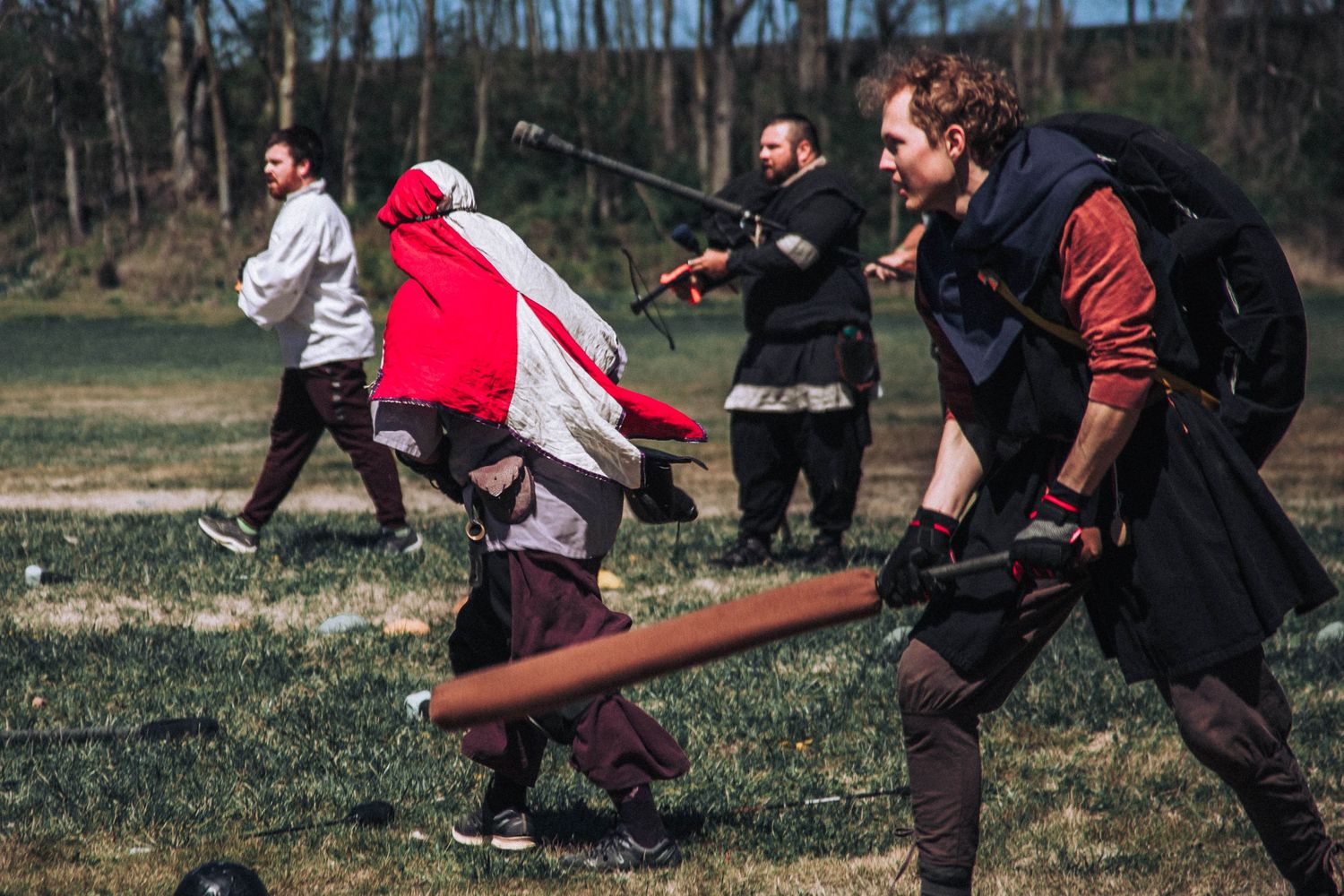

Best for: LARPs centered on community improvement, accessibility, inclusion, or social wellness.
501(c)(4) — Social Welfare Nonprofit
Guild Requirements for Creation
Very similar to 501(c)(3):
Create Articles of Incorporation
Apply for state nonprofit status
File IRS Form 1024
Write bylaws
Form a Board of Directors
Establish a mission tied to community welfare (not just recreation)
Minimum Board Requirements
Usually 3 directors, same as (c)(3)
Officers must be appointed
Board must operate with transparency and accountability
Rules & Restrictions
Must primarily promote social welfare
More freedom to lobby or advocate than a 501(c)(3)
Cannot primarily serve private interests
Donations are not tax-deductible
Must reinvest all revenue into the organization
Annual Maintenance Requirements
File Form 990 annually
Hold board meetings and record minutes
Maintain financial transparency
Renew state nonprofit registration
Best for: Combat LARPs, campaign games, reenactment groups, or any game funded mainly by memberships.
501(c)(7) — Social or Recreational Club
Guild Requirements for Creation
A (c)(7) is much simpler than the (c)(3):
Create Articles of Incorporation
Apply for state nonprofit status
File IRS Form 1024-A to obtain exemption
Write bylaws that outline membership rules
Form a Board of Directors
Establish a system for dues, membership tiers, or paid players
Minimum Board Requirements
Usually 3 directors
Must have officers (President, Treasurer, Secretary)
Board can include members of the LARP unless your state restricts related individuals
Rules & Restrictions
MUST be primarily funded by members, not the general public
65%+ of revenue must come from members
Non-member income is taxed as UBIT (unrelated business income)
Activities must be recreational, social, or hobby-based
Cannot offer public services for free (must prioritize membership benefits)
Donations are not tax-deductible
Cannot operate as a for-profit business in disguise
Annual Maintenance Requirements
File Form 990 or 990-N
Renew state nonprofit status
Maintain a membership roster
Annual meeting & documented minutes
Uphold bylaws and membership rules
Best for:
New LARPs, pilot projects, small groups, or artistic one-shot events.
Fiscal Sponsorship (The “Borrowed Nonprofit Status” Option)
Guild Requirements for Creation
A (c)(7) is much simpler than the (c)(3):
Find a nonprofit sponsor (usually a 501(c)(3))
Sign a fiscal sponsorship agreement
Provide a project budget
Follow the policies of the sponsoring nonprofit
Send them a percentage of your revenue (typically 5–10%)
Minimum Board Requirements
Internally, you still need:
A small leadership team
Basic bookkeeping
Project documentation
Compliance with the sponsor’s rules
But you do not need:
Your own board
Your own IRS filings
Your own nonprofit paperwork
Rules & Restrictions
All donations must be processed through the sponsor
Sponsor legally owns the funds until granted to your project
You must follow the sponsor’s policies (think of it as joining a guild under their banner)
Projects must align with the sponsor’s charitable mission
Annual Maintenance Requirements
Most of the heavy lifting is done by the sponsor. You simply:
Provide project updates
Submit expenses for approval
Maintain internal records
Operate transparently
What’s the same (both 501(c)(3) and 501(c)(7))
Tax-exempt status at the federal level if you meet the rules and keep good records.
Formal governance: organizing documents (articles/bylaws), board/leadership oversight, minutes, policies.
Annual compliance expectations (typically Form 990 series filings, plus state charity/solicitation and business registrations where applicable).
Unrelated business income can still be taxable (UBIT concepts apply broadly; social clubs are explicitly taxed on “unrelated” income and nonmember income can risk exemption).
No private inurement (profits can’t be distributed to insiders—different wording/standards, but both require nonprofit operation). For 501(c)(3) this is explicit and strict
What’s different (quick intuition)
501(c)(3) (Charitable/Educational)
Best when your LARP org’s purpose is educational, charitable, arts/culture, youth development, community programming, accessibility initiatives, etc.—and you want tax-deductible donations and grant eligibility.
Must be organized/operated for exempt purposes and avoid private benefit/inurement.
No political campaign intervention at all.
If you want “public charity” status (often preferred), you’ll track and maintain public support over time.
501(c)(7) (Social/Recreation Club)
Best when your LARP org is primarily a member community formed for recreation/pleasure/fellowship (i.e., “we run games for members”), funded mostly by dues/fees from members.
Must be supported primarily by membership dues/fees/assessments.
Can receive up to 35% of gross receipts from nonmember sources (including investment income) without losing exemption—but too much nonmember/unrelated income can jeopardize status.
Typically not the go-to structure for big public-facing fundraising or grant dependency
Pros & cons for a LARP org
Option A — 501(c)(3) Pros
Donations can be tax-deductible for donors,
Donations can be tax-deductible for donors, which can meaningfully increase fundraising potential. (Core reason many choose (c)(3).)
Better fit for grants/sponsorships that require a charitable org.
Strong credibility for community benefit programs: scholarships, accessibility funds, youth programming, educational workshops (costuming, theater, safety, conflict resolution), historical arts, etc.
Clear guardrails for conflicts of interest (can be a feature for community trust): private benefit/inurement prohibited.
Option A — 501(c)(3) Cons
Harder to justify if your primary reality is: “we run games for dues-paying members” (that reads more like a club than a charity).
More constraints around messaging/advocacy:
No political campaign intervention.
Lobbying is limited (you can lobby, but it can’t become a “substantial part” without planning/structure).
Ongoing need to document that activities primarily advance the exempt purpose, not just member entertainment.
If you pursue public charity status, you must manage the public support test over time.
Option B — 501(c)(7) Pros
Clean match if your LARP is fundamentally a membership recreation community (dues in → games out).
Usually simpler “story” to defend: fellowship/recreation for members, as long as your revenue is mostly from members.
Still tax-exempt on member-related income; can operate events primarily for members.
Option B — 501(c)(7) Cons
Donations generally aren’t tax-deductible like a (c)(3) donation would be (common deal-breaker for fundraising).
Must watch nonmember income carefully:
IRS guidance highlights that too much nonmember/unrelated income can risk exemption, and notes the 35% nonmember-source receipts concept.
Public-facing ticket sales, merch, venue rentals to nonmembers, sponsorships aimed at the general public can push you toward nonmember income issues (and/or taxable income).
Less aligned with “public benefit” branding if you’re trying to build a large charitable mission.
Quick “which one tends to fit” examples (LARP-specific)
Leans 501(c)(7): closed membership; dues-based; most events for members; minimal outside fundraising; limited nonmember ticketing.
Leans 501(c)(3): scholarships/aid fund is central; educational programming is core; you rely on public donations/grants; you intentionally serve a broader public beyond members.
501(c)(3) vs 501(c)(7) for a LARP Organization
Pros
- Tax-deductible donations (typically the biggest fundraising advantage).
- Often a better fit for grants and “community benefit” sponsorships.
- Strong credibility for education/accessibility programs: scholarships, youth initiatives, safety training, workshops.
- Strict limits on insider benefit can increase community trust ().
Cons
- Harder to justify if the reality is mainly “members pay dues to play.”
- No political campaign intervention; lobbying is limited and must be planned carefully.
- More documentation needed to show activities primarily advance the exempt purpose.
- If you’re a public charity, you track and maintain public support over time.
Pros
- Fits naturally if your LARP is a member recreation community (dues/fees → events for members).
- Clear “club” framing for fellowship and hobby-based activities.
- Can be simpler culturally: member-driven benefits, member programming.
Cons
- Donations generally aren’t tax-deductible like (c)(3) gifts.
- Must carefully manage nonmember income (too much can risk exemption).
- Public-facing ticket sales, merch, and rentals can create more tax and compliance friction.
- Less aligned with a “public charity” brand story if you want broad fundraising.
| Topic | 501(c)(3) | 501(c)(7) | Label |
|---|---|---|---|
| Core governance | Board/leadership, bylaws, minutes, policies | Board/leadership, bylaws, minutes, policies | Same |
| Main purpose | Charitable/educational public benefit | Member pleasure/recreation/fellowship | Different |
| Donations | Often tax-deductible for donors | Generally not tax-deductible like (c)(3) | Different |
| Funding model | Can be public donations, grants, program revenue | Must be primarily supported by member dues/fees | Different |
| Nonmember income risk | Depends on facts/UBIT; not usually a “cap” framing | Nonmember income is sensitive; too much can jeopardize exemption | Decision-critical |
| Political activity | No political campaign intervention; lobbying limited | Not the same bright-line ban as (c)(3) | Different |
| Tax on unrelated income | UBIT may apply | Taxed on unrelated income (incl. nonmember income) | Same-ish |
| Best for LARP if… | You can clearly document public benefit programs and want donations/grants | You’re a dues-funded member club running games primarily for members | Different |
LARP-specific checklist (fast self-test)
Click to expand
Decision Aid
- Revenue: What % is dues vs public ticket sales vs sponsorships vs merch?
- Audience: Are you primarily serving members, or the general public/community?
- Programs: Do you run scholarships, education, youth work, accessibility funds as a core program?
- Fundraising: Do you need deductible donations and grant access to survive?
- Operations: Are events open to nonmembers regularly (and would that grow)?
Suggested next step
Click to expand
Same
So Which Structure Fits YOUR LARP?
Here’s the TL;DR in plain adventurer terms:
If your game teaches, inspires, or expresses art:
→ Choose 501(c)(3)
If your game builds community wellness or social outreach:
→ Consider 501(c)(4)
If your game is a hobby club, combat sport, or membership-based world:
→ Go with 501(c)(7)
If your game is new, unstable, or experimental:
→ Use fiscal sponsorship